
Hands-on drum circle facilitator training for recreation therapists, activity coordinators and care teams in seniors living, continuing care, disability and adaptive programs. Delivered at your site, shaped around the people you serve.
You know the room. Some residents are tapping before the first drum is handed out. Some are watching from the doorway. Someone in a wheelchair would play if the drum came to them. This training is about reaching all three.
Book a training conversation See the formatsThe Integrated Community Drum Circle (ICDC) is a structured, facilitated approach to group drumming: everyone in a circle, everyone visible, everyone equal. No experience needed, and every contribution counts.
This training gives your staff the skills and the confidence to lead ICDC drum circle activities for seniors and adaptive groups themselves, week after week, long after the trainers have gone home. It is practical from the first hour. Your team drums, watches the facilitation modelled, practises in small groups, and finishes by planning and co-leading a full circle.
The training is led by experienced ICDC facilitators from the Circles of Rhythm team, and we prefer to send two, so your group sees more than one way of holding a circle.
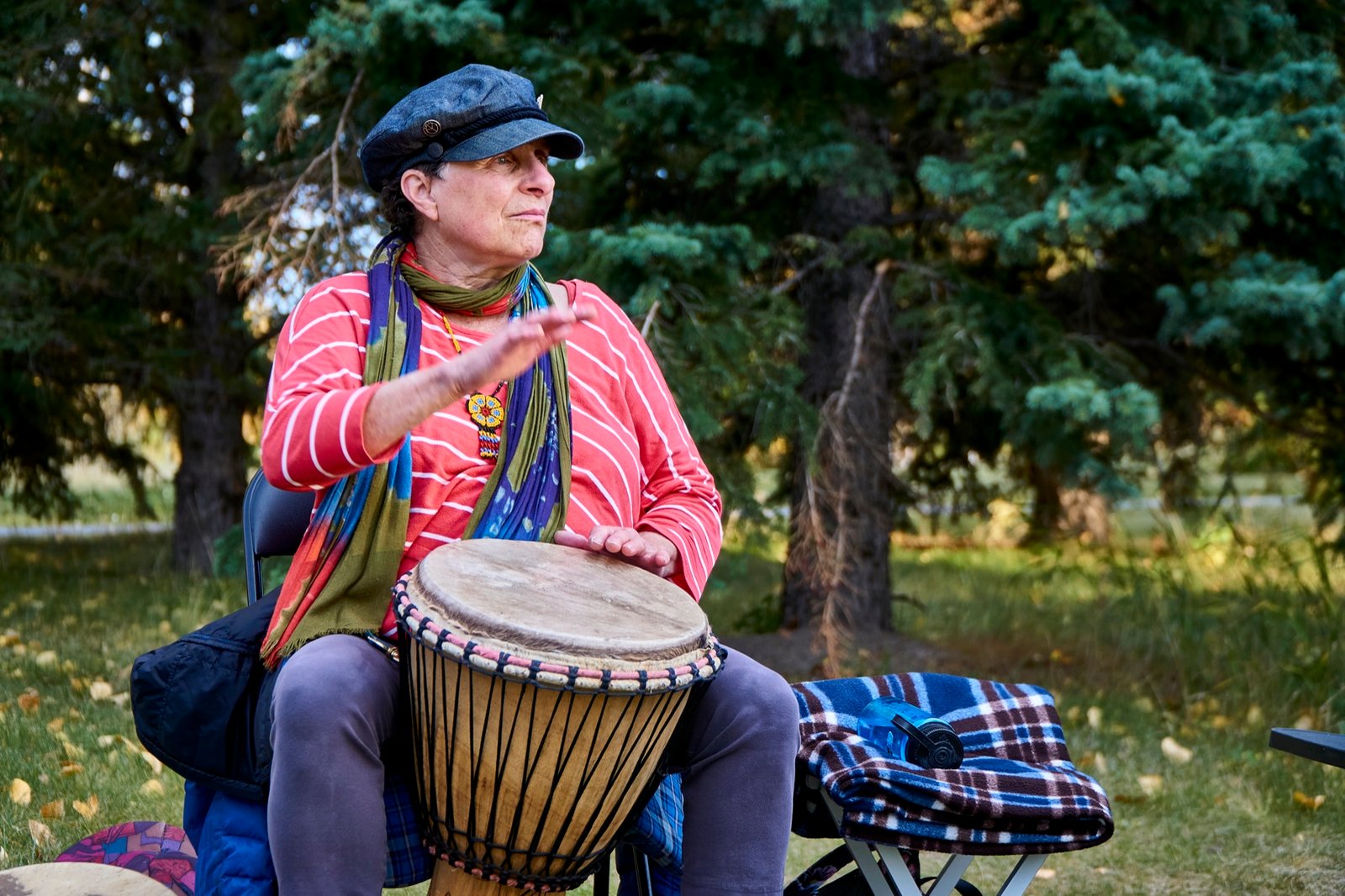
The full program for age care and adaptive drum circles, with its own dedicated training manual.
Day 1 builds the foundation: what an ICDC is and how it developed, drum circle etiquette, using "windows of communication", core facilitation skills and five basic rhythms.
Day 2 puts it to work: interventions and handling disruptions, introducing percussion instruments, gentle drumming techniques, adapting for different needs, and writing your own ICDC plan.
The first day of our 3-day ICDC program, bookable on its own. It focuses on the quieter side of rhythm work: the Rhythm Cradle, the Drum Wash and other gentle drumming techniques, along with a grounding in Indigenous drumming and cultural appreciation.
A good fit for teams who want to begin with slower, relaxation-focused moments before committing to a longer training.
Looking for full drum circle facilitator certification? Our 3-day ICDC Facilitator Training (Level I) is the core certification, with Level II and mentorship to follow.
Recreation therapists and assistants looking for hands-on workshops that add a group program residents can return to again and again.
Coordinators in seniors living, supportive living and continuing care who want a program that works across levels of care, mobility and memory.
Day programs, group homes and community organisations supporting people with a wide range of cognitive and physical abilities.
Also a fit for care staff, health care professionals and social workers. No music experience required. All skill levels are welcome, and nobody is expected to perform.
How it is taught: participants experience a circle led by professional facilitators, watch the skills modelled, practise in small groups with peer coaching, and in groups of four or five plan and co-lead a large circle. Short readings and discussion round it out.
Adaptive drum circles are not a smaller version of a regular circle. They are designed from the start so that every person in the room can take part, in their own way.
Chairs arranged in a circle with space for wheelchairs and mobility aids, so everyone can see and be seen. Activities can be offered seated or standing, and the Rhythm Cradle is taught as a seated exercise.
Tubanos, small frame drums, shakers and tambourines that are easier to play with limited strength or dexterity, with a bass or buffalo frame drum holding a steady beat for the group.
One steady rhythm, call-and-response, familiar songs, big body language and clear, loud cues, so people can see, hear and feel the beat. "If you can say it, you can play it."
"Tap, clap, or just listen." Facilitators learn to offer hand-over-hand guidance or a quieter instrument, and to support emerging rhythm skills without singling anyone out.
Every gentle drumming exercise is fully described before it starts. Participants learn simple signals for stop, soften or louder, and a clear way to say "I am taking care of myself." Choice comes first, always.
No. The training is designed for care staff with every level of comfort, from people who have never held a drum to people who already run music programs. Instruction is part of the experience.
The 2-day training runs best with 12 to 24 participants, which leaves room for small-group practice and for every group to co-lead a circle.
At your site, in a room with an open floor, chairs and a few tables. We are based in Calgary and travel across Alberta and beyond; travel outside Calgary is added to your quote.
No. We can bring all the instruments for the training days, or train on your own. If you are building a kit for your program, we will help you choose instruments that suit your participants and your budget.
If your goal is a regular drum circle program run by your own staff, the 2-day Seniors & Adaptive training is the full path. If you want to begin with gentle, relaxation-focused techniques, the 1-day Gentle Drumming training is a good first step. We will help you choose on a short call.
Every training is quoted for your group, location and instrument needs. Tell us what you are working with and we will shape the format to fit.
No. ICDC facilitator training is professional development, and the drum circles your team learns to lead are recreational and community wellness experiences focused on engagement, connection and enjoyment. They are not therapy, counselling or a regulated health service.
Tell us about your team, your residents or participants, and what you hope a drum circle could add to your week. Choose "Facilitator Training Program" on the booking form and we will be in touch to talk through dates and format.
Prefer to talk first? Call 403-479-6968 or email info@circlesofrhythm.com.
Circles of Rhythm programs are recreational and community wellness experiences. They are not therapy, counselling, or a regulated health service, and are not a substitute for professional mental health care. ICDC facilitator training is a professional development program.